Braking Bad: Automatic Emergency Braking Absent When You Need It Most
AAA research reveals AEB is better at spotting stationary vehicles, but speed poses challenges \n
Sep 29, 2022 | Automotive, Traffic Safety
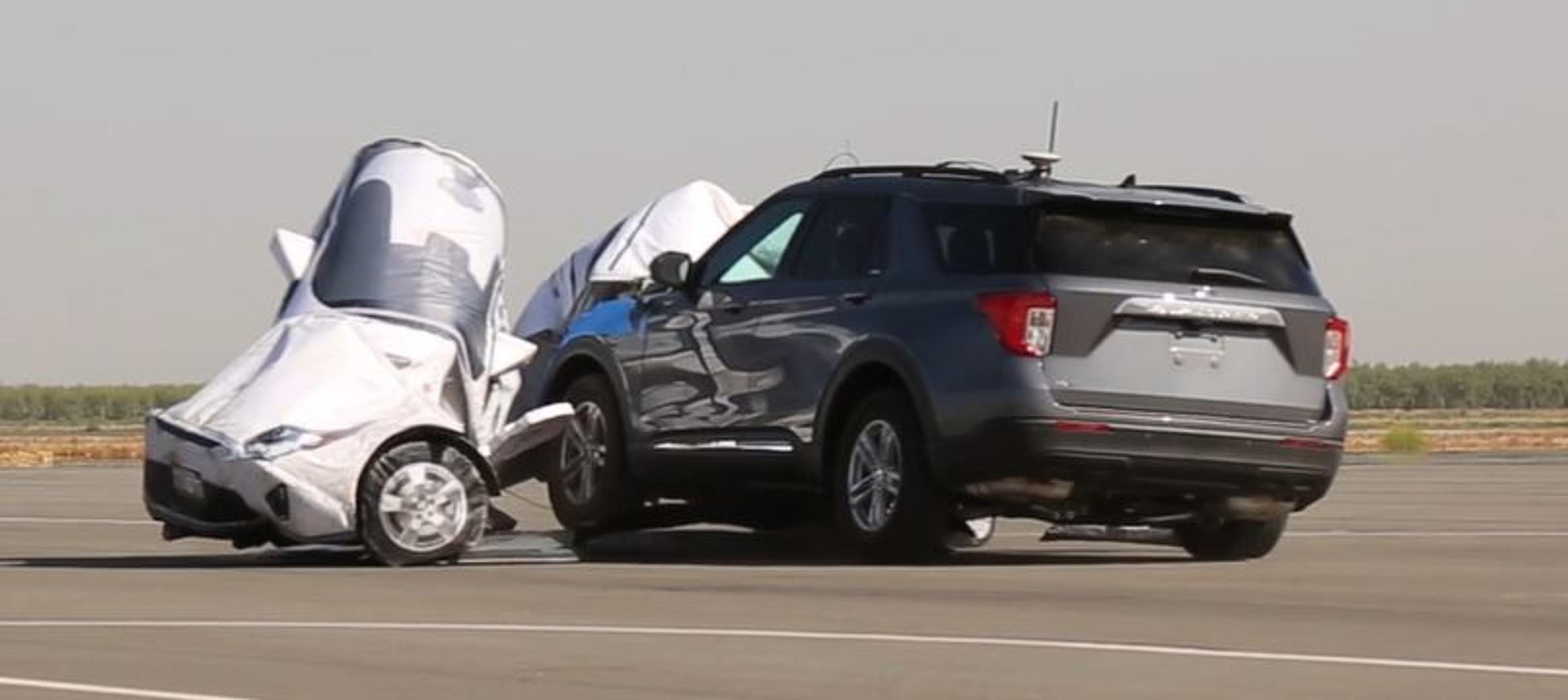
Auto Accident
WASHINGTON, D.C. (September 29, 2022)—Touted as lifesaving, crash-preventing tech, Automatic Emergency Braking (AEB) is standard equipment in most new cars sold in the United States. Over the years, AEB has successfully stemmed rear-end crashes, which often result in injuries, property damage, and even fatalities. But AAA wanted to know if the latest generation of AEB can handle higher speeds and detect moving vehicles in its path at intersections. It struggled with the former and failed with the latter.
“Automatic Emergency Braking does well at tackling the limited task it was designed to do. Unfortunately, that task was drawn up years ago, and regulator’s slow-speed crash standards haven’t evolved,” said Greg Brannon, director of AAA’s automotive engineering and industry relations. “Testing requirements for this technology, or any vehicle safety system for that matter, must be updated to handle faster, more realistic speeds and scenarios with the greatest safety benefit for drivers.”
The Issue
AEB uses forward-facing cameras and other sensors to automatically tell the car to apply the brakes when a crash is imminent. It has reduced rear-end crashes at slower speeds, and the technology has been refined over the years with upgraded hardware and software. But two of the most common deadly crashes at intersections are T-bones and left turns in front of oncoming vehicles. From 2016 to 2020, these two types accounted for 39.2% of total fatalities in crashes involving two passenger vehicles during which the striking vehicle did not lose traction or leave the roadway before the collision.
What AAA Tested
Auto Accident Toyota
- AEB rear-end crash performance when encountering a stationary vehicle at speeds of 30 and 40 mph (currently mandated testing speeds are 12 and 25 mph)
- AEB performance when encountering moving vehicles in collision scenarios involving an intersection – T-bone and unprotected left turn (test vehicle turning left in front of an oncoming car)
The Result
- At 30 mph, AEB prevented a rear-end collision for 17 of 20 test runs, or 85%. For the test runs that resulted in a crash, the impact speed was reduced by 86%.
- But at 40 mph, AEB only prevented a rear-end crash in 6 of 20 test runs, or 30%. For test runs that resulted in a crash, the impact speed was reduced by 62%.
- In both the T-bone and left-turn in front of oncoming vehicle tests, crashes occurred 100% of the time. AEB failed to alert the driver, slow the vehicle’s speed and avoid the crash.
AEB is common in vehicles, regardless of price. Starting on September 1, 2022, 20 automakers representing more than 99% of the US market pledged to make AEB standard equipment on all their new vehicles.
What’s Next
Auto Accident Left
AAA strongly urges automakers and regulatory agencies to focus on system design and test protocols to better handle the types of crashes when injuries and fatalities commonly occur.
Automakers must improve AEB systems to assist drivers in intersection-based crash scenarios. Automakers should include AEB systems as standard equipment on all their makes and models.
Drivers must recognize an AEB system’s limitations and remain engaged when behind the wheel.
Methodology
AAA selected four vehicles for testing, choosing two of each driver monitoring design type, camera-equipped and input from the steering wheel. AAA does not rate vehicle performance. The vehicles were as follows:
- 2022 Chevrolet Equinox LT with “Chevy Safety Assist”
- 2022 Ford Explorer XLT with “Pre-Collision Assist with Automatic Emergency Braking”
- 2022 Honda CR-V Touring with “Honda Sensing”
- 2022 Toyota RAV4 LE with “Toyota Sensing”
The vehicles were procured directly from the manufacturer or specialty rental fleets. To ensure the proper functioning of the AEB system, all vehicles were serviced at dealerships. Please refer to the full report for methodology details, including specific testing equipment and test track characteristics.
About AAA
Started in 1902 by automotive enthusiasts who wanted to chart a path for better roads in America and advocate for safe mobility, AAA has transformed into one of North America’s largest membership organizations. Today, AAA provides roadside assistance, travel, discounts, financial and insurance services to enhance the life journey of 63 million members across North America, including over 56 million in the United States. To learn more about all AAA has to offer or to become a member, visit AAA.com.