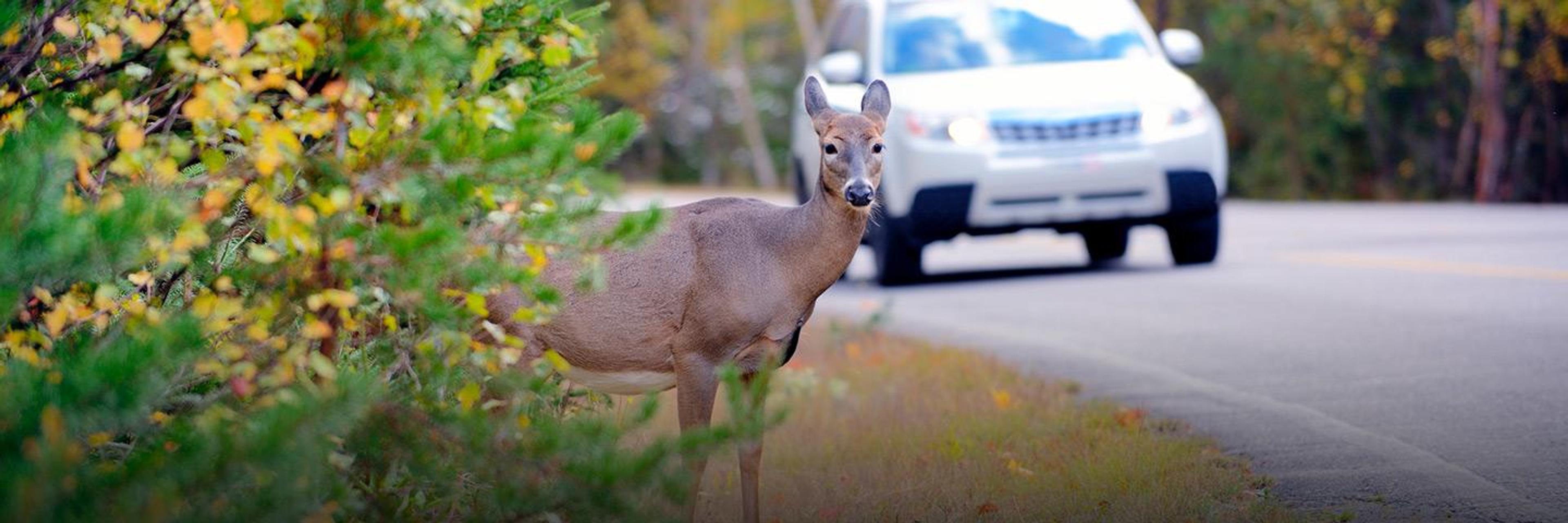
How to Avoid Animals on the Road
Most animal-vehicle collisions occur between October and December, and deer are involved in more collisions than any other animal. The Insurance Institute for Highway Safety estimates there are more than 1.5 million deer-vehicle collisions each year, resulting in 150 human deaths, tens of thousands of injuries and more than $1 billion in vehicle damages.
Here are some tips for preventing animal collisions on the road:
- Scan the road ahead of you. Sweep your eyes front, left and right for signs of deer and other animals. While these kinds of accidents are most frequently caused by animals darting in front of a car, animals can also run into the side of a vehicle.
- Be especially attentive during commute hours. Deer and many other animals are most active between 5-8 a.m. and 5-8 p.m.
- When driving at night, use high beam headlights if there’s no oncoming traffic. The extra light may help you spot animals sooner and give you time to slow down, move over or honk your horn to scare the animal away.
- Look out for other deer. Deer rarely travel alone. If you see one, the chances are high there are others nearby.
- Brake firmly and remain in your lane if impact is imminent. Many serious crashes occur when drivers swerve to avoid animals and hit oncoming vehicles, or crash into fixed objects on the side of the road, such as lampposts or trees.
- Always wear a seatbelt. Most injuries in animal-vehicle collisions occur when passengers don’t wear their seatbelts.
- Stay away from wounded animals. A wounded and frightened animal can be unpredictable and may cause injury. If an animal is in the middle of the road and blocking traffic, call the police or animal control organization.
Are you protected against animal collisions? Learn more about AAA Auto Insurance here or call 1-855-282-2275.
The information listed above was obtained from sources believed to be reliable. AAA South Jersey, its affiliates and employees assume no liability in connection with the information or suggestions. The recommendations provided are general in nature; there may be additional safety procedures available that are not referenced on this webpage.